Showing posts with label October 28. Show all posts

Sunday, 27 October 2019

All About Foam Fire Extinguishers

Foam Fire Extinguishers

Foam fire extinguishers are an excellent solution if you run the risk of Class B fires involving flammable liquids, such as petrol and paint.

Aqueous film forming foam (AFFF) is a synthetic foam concentrate consisting of fluorinated surfactants plus foam stabilisers which are mixed with water to form a foam.

The fluorine-free extinguisher is a next generation short chain based extinguisher with superior performance.

How to Identify A Foam Fire Extinguisher?

Foam Fire Extinguishers are a red cylinder with a blue band running all around the top. They also have a different nozzle compared to other extinguishers that are used to help mix the foam.

Where To Use A Foam Fire Extinguisher

AFFF fire extinguishers are suitable for use on common flammable liquid fires such as:

  • Petrol
  • Oil
  • Paint

Foam fire extinguishers shouldn’t be placed in locations near electrical equipment. In the heat of the moment, someone may use the extinguisher without thinking about it and spray on live electrical equipment.

How Does A Foam Fire Extinguisher Work?

The Foam fire extinguisher works by providing a film on top of the fuel, starving the fire of oxygen.
For class A fires not only does it remove the oxygen but also lowers the temperature thanks to the cooling effect from the water.

Foam Extinguisher Sizes

We stock two types of foam fire extinguisher

9.0ltr – Foam AFFF fire extinguisher.
9.0ltr – Fluorine-free foam fire extinguisher.

Advantages Of Foam Extinguishers

Foam provides an extended lasting layer to control the fire after the extinguisher discharge is complete.

It can also be used to form a vapour suppression barrier over flammable liquid spills.

Our new fluorine-free foam breaks down around 97% after 14 days. Thus making it an even more environmentally friendly option.

Disadvantages Of Foam Extinguishers

A foam fire extinguisher is mostly water. therefore should not be used on Class E fires.

The aqueous solution is corrosive and requires to be cleaned after used, particularly on painted surfaces.

It is advised to not use foam extinguishers for class F fires.

How To Use A Foam Fire Extinguisher

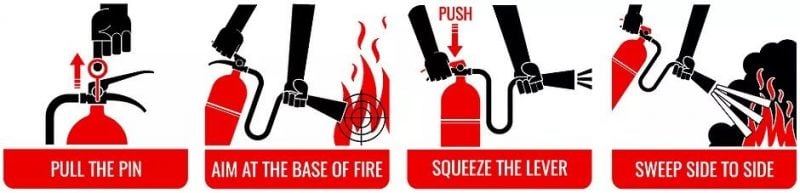
Like all other fire extinguishers, you need to remember the PASS-word.

Pull the Pin
Aim at the base of the fire.
Squeeze the handle.
Sweep from side to side.

Fire extinguisher PASS method

See our guide on How to Use a Fire Extinguisher.

How To Use A Foam Fire Extinguisher Video

From Our Fire Protection Blog Post All About Foam Fire Extinguishers

from
https://fireprotectiononline1.wordpress.com/2019/10/28/all-about-foam-fire-extinguishers/

From https://catherinelee4.blogspot.com/2019/10/all-about-foam-fire-extinguishers.html

source https://catherinelee4.wordpress.com/2019/10/28/all-about-foam-fire-extinguishers/

How To Become A Firefighter In Connecticut

Connecticut may only be a small state in size, but how to become a firefighter in Connecticut is a question I’ve received several times.

With just 5,567 square miles of it lying to the south of New England, it is a densely populated state. In fact, it is the 4th most densely populated state in the country.

This means a lot of people and property to protect in a very small space. The amount of fire departments here may not be that big but that doesn’t mean that they don’t encounter plenty of challenges.

Whether you are a student, high school grad or someone in need of a career change, you can see what the fire service has to offer here. So, what does it take to become a firefighter in Connecticut?

How to Become a Firefighter in Connecticut

  • Generally, 18 years old or older
  • High school diploma or GED
  • A valid driver’s license
  • Good physical and mental health
  • EMT training advised

The basic requirements in Connecticut aren’t too challenging. The general rules for age, residency, education and physical fitness apply here too.

In fact, there are lots of ways that you can get your foot in the door if you are prepared to be a volunteer firefighter first and study hard.

In this guide, I want to highlight some of the training options and departments in the state. I also want to take a moment to look at the importance of volunteering in smaller communities.

Firefighting in Connecticut

If you want to start out as a firefighter in Connecticut, a volunteer role might be the best option. There are lots of chances to join smaller departments across the state.

Here you can get valuable hands-on experience and learn about the fire service. The “quiet corner” of the north-east of Connecticut has little need for the diverse, extensive service provisions of somewhere like Hartford. But, they still need coverage and community services.

Coventry is a great example of a town with a strong volunteer department. They may only cover 38.4 square miles, but they ensure that personnel have the best training for fire and EMS calls.

One of the perks about Connecticut is that there are Fire Assistance Grants for volunteer departments where they can get more assistance and funding.

The idea is that this will help struggling areas tackle agricultural and woodland fires with greater ease. In order to qualify, the local population must be less than 10,000.

Another way for firefighters to help out in these rural areas is to work alongside the DEEP forestry division.

There is a high risk of forest fires in the state in the spring and it is up to the department and local fire crews to minimize the risks and any damage. DEEP monitor around 1.8 million acres of land for any threats and sent reports on daily risks and danger levels.

They then work with fire departments and other outlets to keep the public away, keep an eye on the situation and handle any fires.

Urban Firefighting in Connecticut

There is a lot more to this state than just its forests, wildland management and volunteer services. Some major towns and cities need skilled, paid firefighters to handle major fires and emergencies.

We also can’t forget that Connecticut and its biggest cities lie very close to New York City. If there was to be another major incident there, there is every chance that Connecticut firefighters would go and help.

Therefore, you need to be ready for the absolute worst-case scenarios even if they are a remote possibility. On-going training in emergency preparations, hazardous materials, crash sites and rescues can help.

Closer to home, those skills will be useful on highways, in airports and in massive structures in the cities. It also helps to update your medical training certificates, so you can provide life-saving help too.

Connecticut is largely well-known as a college state and students need protection too.  The University of Connecticut is an acclaimed institution in its own right and there is also Yale over in New Haven.

This means that there is a large younger population for a large portion of the year. Local fire departments need to be ready to handle their needs in both a fire rescue and a fire prevention capacity. Good communication skills and outreach programs can offer students advice on how to stay safe on campus and in dorms.

In fact, the University of Connecticut has its own fire department that looks after students living and studying between the campuses in Storrs and Farmington.

They claim to provide help for around 5400 emergency calls per year in these areas. They also help fire marshals keep the buildings safe and perform those crucial outreach tasks.

Some students studying in Connecticut may wish to join their local campus team and give something back to their community. This isn’t possible at this department because they don’t offer such a volunteer program.

However, students in the area are encouraged to look into volunteer options in local departments in the area. More details on these options can be found by following this link.

The alternative for those of student age in Connecticut is to enroll in a fire technology or fire science course. You can then use that knowledge to proceed with a career in a department either at the university or elsewhere in the state.

Fire Academies in Connecticut

There are many options where students can get an academic qualification or train at a fire academy. They include the following:

New Haven: Gateway Community College and New Haven Fire Department

Hartford: Capital Community College

West Haven: University of New Haven

Derby: Valley Fire Chief’s Regional Training School

Wolcott: Wolcott Fire Training School

Waterbury: Naugatuck Valley Community College

Norwich: Three Rivers Community College

Windsor Locks: Connecticut Fire Academy

Fairfield: Fairfield Fire Department

Willimantic: Eastern Connecticut Fire School

The University of New Haven offers a Bachelor of Science program in Fire Science. The interesting thing about this course is that it isn’t as broad as some associate degrees or certificates in community colleges.

Students will get to know all the basics under the guidance of a tutor with fire experience. This includes a lot of practical work as well as theory.

From there, students can focus their studies on either Fire Administration of Fire Investigation. The path chosen can help with future career goals. Learn more about this program here.

Of course, there is always the opportunity for recruits to gain most of their basic training while on probation with a department.

Many departments will give conditional offers of employment with the expectation that applicants will pass certain certificates in a given time frame. Firefighter 1 and 2 and an EMT certificate are essential here. You can then go onto colleges or training school courses for advanced learning.

Major Fire Departments in Connecticut

There are two major cities that I want to look at as an alternative to the volunteer and student programs mentioned above. These cities, and others like them, are often the biggest employers of career firefighters and those in more specialty roles.

How to Become a Stamford, CT Firefighter

  • At time of application, must have graduated from an accredited high school or received an equivalency diploma (G.E.D.) from a recognized authority
  • By date of written examination, must be at least 18 years of age
  • Must possess a valid driver’s license
  • Must have a CPAT Card in date

Stamford is a vibrant city with a large residential population and even larger day-time population. This means a need for a 24/7 department that can look after people in their homes over 39.9 square miles at night and tend to round-the-clock medical emergencies.

It also means a need for skilled personnel that can handle the needs of all the workers commuting in. They have over 230 employees in 6 stations and equipment to handle EMT services, fire suppression, high-angle rope rescue, hazmat incident and more. Find out more here.

How to Become a Hartford, CT Firefighter

  • Generally, 18 years old or older
  • High school diploma or GED
  • A valid driver’s license
  • Good physical and mental health
  • EMT training advised

Then there is Hartford. There are fewer people to take care of here in about half the area – around 124,000 people in 18.4 square miles.

However, this ISO 1 station appears to be better funded and better staffed. There are 12 stations housing 17 companies and around 360 career firefighters. The department is home to some important regional equipment, such as the decontamination unit.

Therefore, fire crews here must have all the right training and good communication skills to work with other departments and members of the public. You can find out more here.

Job Prospects for Firefighters in Connecticut

Like the majority of states in New England, Connecticut has a decent rate of employment and demand for firefighters. The average wage is above the national average too.

In 2018, there were 3,140 firefighters employed with a ratio of 1.89 in 1000 jobs.

The mean wage for firefighters in Connecticut is $63,630.

This is more than neighboring Rhode Island, which saw an average yearly salary of $55,240, and the $60,080 in Massachusetts.

https://www.bls.gov/oes/current/oes332011.htm#st

If you’re interested in how to become a firefighter in Connecticut, I recommend you get started as soon as you can.  Connecticut is big on youth involvement in the fire service. You can become a cadet, learn skills with departments and volunteer at the right age.

You can also take courses to gain all the right certificates to become a career firefighter here. The state has a lot of people to protect in a very small area. With the right training and attitude, you can make sure that you are a great addition to any Connecticut fire department.

The post How To Become A Firefighter In Connecticut appeared first on FirefighterNOW.

from FirefighterNOW https://firefighternow.com/how-to-become-a-firefighter-in-connecticut/

From https://catherinelee4.blogspot.com/2019/10/how-to-become-firefighter-in-connecticut.html

source https://catherinelee4.wordpress.com/2019/10/27/how-to-become-a-firefighter-in-connecticut/
How To Become A Firefighter In Missouri

Missouri is a state that has an increasing need for skilled firefighters which leaves many asking how to become a firefighter in Missouri.

Some departments don’t have the same regulations and standards as those in neighboring states. But, there is still a demand for the very best to help growing city populations.

Missouri firefighters need to be prepared to train and learn – no matter what the rules say. There are too many circumstances and risks where knowledge and specialist equipment are essential. So, how can you become one of these firefighters in Missouri?

How to Become a Firefighter in Missouri

  • Minimum age of 18, but be aware of upper age restrictions
  • Must have a valid state driver’s license and residency
  • Physically and mentally fit
  • High school diploma or GED
  • No regulation for Firefighter 1 or EMT training at entry level

As you can see, the minimum requirements here are pretty straightforward. One of the great things about this state is that they are open to hiring many different applicants as long as they go on to work and study hard.

Below I will talk about the training requirements and recommendations for this state, as well as some of the major departments. Before that, I want to highlight some aspects of the hiring process and some of the unique risks of being a firefighter in Missouri.

Firefighting in Missouri

Most departments in Missouri will use very similar screening and firefighter interview processes when hiring firefighters.

Typically, this means interviews with officers as well as a chief’s interview, background checks on criminal activity and medical testing. The main aim here is to ensure that you have the right character, mentality and fitness to perform to the department’s standards.

Once you prove this and pass this portion of the process, you can then move onto recruit training and a probation period.

One thing to keep in mind here if you are applying in Springfield is that they are apt to highlight their tattoo policy. Policies on tattoos are controversial right now and vary between department.

Some still don’t like firefighters to have visible tattoos because of public perception. This is the case here. So, if you have tattoos on your arms or neck you may have to wear long sleeves or bandages on duty.

Preparedness for extreme disasters and weather events is a must in Missouri, especially for all those living and working near St Louis.

Missouri sits within Tornado Alley and while major events are infrequent, they can be catastrophic. There was an EF4 level event at the Lambery-St Loius International Airport in 2011.

The same year, 159 people died and one third of Joplin was destroyed. It is up to Missouri firefighters to pick up the pieces – literally and figuratively.

They are the ones to help the people left behind in the debris. It takes a lot of knowledge to handle the damaged buildings and any contamination risks. It also takes a lot of strength and good character to help the communities.

Another risk factor here is that around 55% of the entire state population lives within these major metropolitan areas. that’s a lot of lives at risk if another tornado or other major disaster were to occur.

The largest by far are Kansas City and St Louis, with around 489,000 and 309,000 residents respectively. However, the wider metropolitan area of St. Louis now contains 2.91 million.

Fire Academies in Missouri

Before I mention some of the training facilities and fire academies that are available in Missouri, it is important to note that Missouri doesn’t see certification as mandatory. This is uncommon these days, but it does mean that you can start working as a firefighter a lot sooner.

Despite this, all certification is recommended so that you have the same level of training as everyone else. It ensures cohesion and professionalism in a range of jobs.

Thankfully, the state Division of Fire Safety has now awarded around 95,000 certificates to more than 36,000 Missouri firefighters.

Saint Louis: Saint Louis Community College

Kansas City: Metropolitan Community College-Kansas City

Columbia: Columbia College and Missouri Fire & Rescue Training

Union: East Central College

Neosho: Crowder College

Saint Charles: Lindenwood University

Warrensburg: University of Central Missouri

Parkville: Park University

Hillsboro: Jefferson College

Cottleville: St Charles Community College

Park Hills: Mineral Area College

Crowder is one of many smaller colleges to work with fire departments and provide fire training in a classroom environment.

Last year, the college received a grant from the state division of fire safety to hold classes for regional firefighters. This means that there are now various locations in Ozark area where trainees can learn skills for specific pieces of equipment, rope rescue and instructor training.

The school will also provide tuition for Firefighter I and II courses. This accessibility is important in a state that has a growing demand for personnel. Find out more here.

Missouri State University offers a higher education program in Fire and Emergency Services. There is a series of courses on offer via online access that cover a range of disciplines.

Each subject should help you gain skills and knowledge for a career in management and advance your position. They include topics on administration, politics, personnel management, fire research, community risks and legal issues.

Those that complete 4 of these courses can walk away with a certificate. Those that go on to complete 6 can earn their minor. It is then up to you whether you want to take this further with a full degree or a different role in the fire service. You can find out more here.

Major Fire Departments in Missouri

The following is a list of major fire departments in Missouri.  While it isn’t comprehensive it’s a great place to start if you’re interested in learning more about how to become a firefighter in Missouri.

How to Become a St. Louis, MO Firefighter

  • Minimum age of 18, but be aware of upper age restrictions
  • Must have a valid state driver’s license and residency
  • Physically and mentally fit
  • High school diploma or GED
  • No regulation for Firefighter 1 or EMT training at entry level

I have to start with St Louis because it is such a large city and such an important hub in Missouri. There is a very dense population of around 320,000 residents within 62 square miles. That means that there is a high risk of calls for fires, accidents and medical emergencies.

This risk rises significantly when we factor in all the extra people commuting into the city for work every day. The department here is the second oldest in the US and strives to maintain high standards to protect its citizens.

To do this, fire departments have access to specialist equipment from a range of divisions. There is a dedicated crew for the aircraft rescue at Lambert-St. Louis International, a trench and collapse team and also a Marine Operations team. The latter are on stand-by on the Mississippi to help with incidents on the water.

The requirements to become a firefighter in St Louis are fairly straightforward in terms of what to expect.

They want people that can pass all the usual written tests and physical tests, as well as all the background and medical screening. Those that do so must achieve their Firefighter I and II Certificates and their EMT certificate following a 16-week course at the Fire Academy.

One obstacle to be aware of here is that the city only wants people between the ages of 18 and 33. This will be a blow for those in their mid-thirties unless you have military experience with an honorable discharge. You can find out more about their process here.

How to Become a Branson, MO Firefighter

  • Minimum age of 18, but be aware of upper age restrictions
  • Must have a valid state driver’s license and residency
  • Physically and mentally fit
  • High school diploma or GED
  • No regulation for Firefighter 1 or EMT training at entry level

We should also look at some of the smaller departments in the state to see how they compare. Branson has three stations and 36 personnel in the operations division.

They took 4,500 calls in 2018 and are training to handle medical emergencies, structural collapse, water rescue, hazardous materials and more. The city is also a “storm ready community”, which means that it is ready to handle the worst possible weather.

This was largely achieved by the connection to the local community. Residents know how to stay safe and the crew will respond appropriately.  Learn more at this link

How to Become a Mid-County Fire Protection District Firefighter

  • Minimum age of 18, but be aware of upper age restrictions
  • Must have a valid state driver’s license and residency
  • Physically and mentally fit
  • High school diploma or GED
  • No regulation for Firefighter 1 or EMT training at entry level

This department is one on the rise having recently taken responsibility for handling calls in the city of Camdenton. This means that they operate over a vast area of 227 square miles from six stations.

The distance requires firefighters to be efficient and ready to handle lots of different calls that can happen within the area. For example, they have specialist equipment for dive teams, fireboats, EMS trucks and more. The majority of the team here are volunteer firefighters but there are also paid roles available for career firefighters. You can learn more here.

Job Prospects for Firefighters in Missouri

Missouri firefighters often fair a little better than their counterparts in neighboring western states. There are higher employment rates and, in 2018, there were 6,500 with a ratio of 2.32 jobs.

At the time, the annual mean wage was $51,000 for firefighters in Missouri.

When we compare this Kansas, we see a big drop down to $37,930 per year.

https://www.bls.gov/oes/current/oes332011.htm#st

There are lots of perks to learning how to become a firefighter in Missouri. There are few limitations to stop eager new applicants from getting started – and this applies to the training and certification requirements too.

New recruits can start at the very bottom and work their way up to learn more disciplines and improve their skills. There is also a fair wage and good job opportunities for doing so. Missouri has its fair share of challenges, but this only makes the job all the more rewarding.

The post How To Become A Firefighter In Missouri appeared first on FirefighterNOW.

from FirefighterNOW https://firefighternow.com/how-to-become-a-firefighter-in-missouri/

From https://catherinelee4.blogspot.com/2019/10/how-to-become-firefighter-in-missouri.html

source https://catherinelee4.wordpress.com/2019/10/27/how-to-become-a-firefighter-in-missouri/

How To Become A Firefighter In Maryland

If you’re wondering how to become a firefighter in Maryland, you can’t assume that every department is the same – or every day on the job for that matter.

Maryland is an interesting state with lots of different vocations, attractions and needs.  Life as a firefighter in Maryland is diverse with lots of interesting calls to handle.

The best firefighters here are the ones that will put themselves through the all the right training to best serve their community. So, how can you become one of these dedicated Maryland firefighters?

How to Become a Firefighter in Maryland

  • 18 years old or older
  • A valid state driver’s license and residency
  • High school diploma or GED
  • Commitment to continue your education
  • Good character is essential

There aren’t too many major hurdles facing firefighters that want to get onto a Maryland department at entry levels. If you have the right education, character and proof of your age and residency, you are then on the first step towards your new career.

In this guide, I want to tell you a little more about some of the different roles in Maryland and the training that you will need to succeed. I will also talk about some of the different departments and their expectations.

Firefighting in Maryland

One of the interesting things about Maryland is that there are 5 very distinct geographical areas in the state with clear boundaries and features.

Those that live and work in the Western area around the Appalachian Mountains will have different challenges to deal with as a firefighter than those in the Capital region or the Eastern Shore. I want to take a moment to discuss these three and what you can expect as a firefighter there.

The Western Region:

The Western area by the mountains is much more rural and sparsely populated. Here local fire-departments and volunteer services need to use their skills to reach those in need and manage the landscape.

This could mean providing medical aid for hikers and campers in the wilderness, dealing with forest fires or simply helping with domestic fires and outreach programs in smaller communities. Specialist wildland fire training and rope rescue courses may help.

The Capital Region:

The Capital area is much more densely populated as the majority of the state population resides around Baltimore and Washington DC. This brings different risks with fires in larger buildings with large groups of people in need of help.

Firefighters need to be skilled in extraction strategies, dealing with structural issues and handling different materials. The major road networks also bring the risk of major traffic accidents and other calls for EMT services.

I will talk more about Baltimore and its department below. Advanced courses in hazardous materials and structural issues are a must.

The Eastern Shore:

Then there is the Eastern Shore with a vast coastline along the Chesapeake estuary. This brings different challenges with coastal communities that may be at risk from the weather, high tides and other maritime issues.

Firefighters here should be prepared to handle fires situated on boats and in ports, providing flood relief, dealing with hazardous spills and providing water rescue. The water around Maryland may be its biggest asset.

There is a lot of money in the fishing industry, the port and in tourism on the shores. Ocean City is a popular destination, as a smaller coastal town.

Therefore, fire crews in these areas also need to prepare for an influx of visitors that may not be so savvy about water safety.

Volunteer Firefighting in Maryland

Becoming a volunteer firefighter is a great way to get your foot in the door in Maryland. Local fire departments in smaller communities will always be grateful for help to handle calls and community services.

Your experience here and the on-the-job training will give you a good idea of what it takes to be a career firefighter. You can then train to get your Firefighter 1 and 2 certifications to hopefully get a paying role somewhere else.

The expectations in the Maryland volunteer departments are all about your character as a service member. They talk about the need to be a team player that will commit to the work and provide a competent service on every call.

They also would rather see people with compassion, integrity and honesty than those with lots of qualifications but no community spirit. They know that the skills and knowledge can be taught – and they do so free of charge to get everyone on the same page.

They use training guides in collaboration with the University of Maryland for the best education possible. You can find out more here.

Fire Academies in Maryland

There are two routes that you can take when training to become a firefighter in Maryland. The first is to take the academic route. Some colleges and universities in the state offer Fire Science courses that provide college credits in key subjects.

A one-year certificate is often enough on its own to get you into your Firefighter I exam. A longer associate degree opens the doors to even more opportunities. The alternative is to go to an official fire academy as a recruit through a fire department.

Baltimore: Baltimore City Community College and The Community College of Baltimore County

College Park: College Of Engineering University Of Maryland Department Of Fire Protection and Maryland Fire and Rescue Institute

Cheltenham: Prince George’s County Training Academy

Salisbury: Salisbury Fire Department Training Division

Frederick: Frederick County Fire/Rescue

Emmitsburg: National Fire Academy

La Plata: College of Southern Maryland

Hagerstown: Kaplan University-Hagerstown Campus and Hagerstown City FD Training Division

Columbia: Howard County Department Of Fire/Rescue Services Training Division

Rockville: Montgomery County Public Safety Training Academy

Towson: Baltimore County Fire-Rescue Academy

Montgomery College has long been a popular choice for an academic approach to education. They have a Fire Science program that teaches the basics of fire management, behavior, prevention and suppression in a classroom setting.

Once completed, the credits can then transfer to another degree course, if desired, at the University of Maryland.

A full degree course can help those with aspirations for leadership roles and more specialized positions in departments. More information is available here.

The Maryland Fire Service Institute:

We also can’t overlook the impact of this institute of fire service training. The center has trained firefighters in the state for more than 80 years and now has more than 400 instructors.

It is all about providing firefighters with the expert knowledge needed to handle the situations they are sure to face. That is why the catalog of courses here is so varied. You can find out more about the opportunities here by clicking this link.

Major Fire Departments in Maryland

The following is a list of major fire departments in Maryland.  While it isn’t comprehensive it’s a great place to start if you’re interested in learning more about how to become a firefighter in Maryland.

How to Become a Baltimore, MD Firefighter

  • 18 years old or older
  • A valid state driver’s license and residency
  • High school diploma or GED
  • Commitment to continue your education
  • Good character is essential

Obviously, we need to talk about Baltimore as it is the largest city in this state and the site of the most calls. There are around 635,000 residents in Baltimore over a total of 81 square miles.

In one year, the department can handle approximately 270,000 emergencies. This is significant compared to other places in the state. There is always the risk of a house fire, medical emergency, vehicle incident or other disasters here.

Firefighters need to be vigilant and keep up with their ongoing training in more specialized areas. That is why it is so helpful that in addition to their 38 stations, Baltimore is also home to The Frank J. Trenner Fire Training Academy and a Public Safety Academy. Find out more here.

How to Become an Ocean City, MD Firefighter

  • 18 years old or older
  • A valid state driver’s license and residency
  • High school diploma or GED
  • Commitment to continue your education
  • Good character is essential

Another department of interest in this coastal state is Ocean City. It may be smaller than Baltimore, but it still has a lot of responsibilities. They are a combination department with around 200 volunteers and 100 career personnel.

They only respond to around 6,000 calls each year and while this seems really small, we have to factor in the seasonal nature of the department. They can get very quiet in winter and very busy in summer. That is because the jurisdiction covers around 10.5 miles of beach in West Ocean City.

So, trainees here need to be prepared for this shift in their workload and the challenges of water rescue, increased medical emergencies and more. You can learn more here.

Job Prospects for Firefighters in Maryland

Maryland firefighters can make a pretty good living because the average wage here is higher than that of neighboring states.

The mean annual salary for firefighters in Maryland is $61,780.

This is above average for the country and higher than neighboring states. Pennsylvania firefighters made around $56,090 on average while West Virginian firefighters made $36,820.

If you’ve been wondering how to become a firefighter in Maryland, just know it is not for the faint-hearted. It is easy to paint a gentle picture of small coastal towns with friendly little volunteer fire departments.

However, those small departments see their fair share of tragedies through many different calls. They all help new volunteers learn lots of skills to become a career firefighter in bigger towns.

If you train hard and show the right attitude, you can look forward to a long and varied career in the Maryland fire service.

The post How To Become A Firefighter In Maryland appeared first on FirefighterNOW.

from FirefighterNOW https://firefighternow.com/how-to-become-a-firefighter-in-maryland/

From https://catherinelee4.blogspot.com/2019/10/how-to-become-firefighter-in-maryland.html

source https://catherinelee4.wordpress.com/2019/10/27/how-to-become-a-firefighter-in-maryland/