Showing posts with label 2019 at 04:38PM. Show all posts

Sunday, 27 October 2019

All About Foam Fire Extinguishers

Foam Fire Extinguishers

Foam fire extinguishers are an excellent solution if you run the risk of Class B fires involving flammable liquids, such as petrol and paint.

Aqueous film forming foam (AFFF) is a synthetic foam concentrate consisting of fluorinated surfactants plus foam stabilisers which are mixed with water to form a foam.

The fluorine-free extinguisher is a next generation short chain based extinguisher with superior performance.

How to Identify A Foam Fire Extinguisher?

Foam Fire Extinguishers are a red cylinder with a blue band running all around the top. They also have a different nozzle compared to other extinguishers that are used to help mix the foam.

Where To Use A Foam Fire Extinguisher

AFFF fire extinguishers are suitable for use on common flammable liquid fires such as:

  • Petrol
  • Oil
  • Paint

Foam fire extinguishers shouldn’t be placed in locations near electrical equipment. In the heat of the moment, someone may use the extinguisher without thinking about it and spray on live electrical equipment.

How Does A Foam Fire Extinguisher Work?

The Foam fire extinguisher works by providing a film on top of the fuel, starving the fire of oxygen.
For class A fires not only does it remove the oxygen but also lowers the temperature thanks to the cooling effect from the water.

Foam Extinguisher Sizes

We stock two types of foam fire extinguisher

9.0ltr – Foam AFFF fire extinguisher.
9.0ltr – Fluorine-free foam fire extinguisher.

Advantages Of Foam Extinguishers

Foam provides an extended lasting layer to control the fire after the extinguisher discharge is complete.

It can also be used to form a vapour suppression barrier over flammable liquid spills.

Our new fluorine-free foam breaks down around 97% after 14 days. Thus making it an even more environmentally friendly option.

Disadvantages Of Foam Extinguishers

A foam fire extinguisher is mostly water. therefore should not be used on Class E fires.

The aqueous solution is corrosive and requires to be cleaned after used, particularly on painted surfaces.

It is advised to not use foam extinguishers for class F fires.

How To Use A Foam Fire Extinguisher

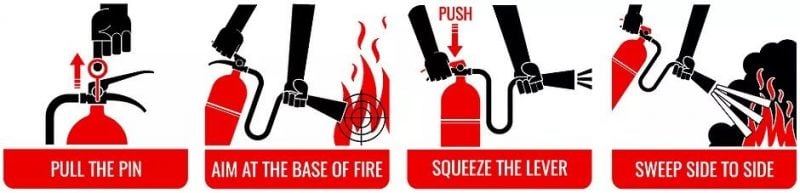
Like all other fire extinguishers, you need to remember the PASS-word.

Pull the Pin
Aim at the base of the fire.
Squeeze the handle.
Sweep from side to side.

Fire extinguisher PASS method

See our guide on How to Use a Fire Extinguisher.

How To Use A Foam Fire Extinguisher Video

From Our Fire Protection Blog Post All About Foam Fire Extinguishers

from
https://fireprotectiononline1.wordpress.com/2019/10/28/all-about-foam-fire-extinguishers/

From https://catherinelee4.blogspot.com/2019/10/all-about-foam-fire-extinguishers.html

source https://catherinelee4.wordpress.com/2019/10/28/all-about-foam-fire-extinguishers/

Saturday, 26 October 2019

How To Become A Firefighter In Colorado

Colorado is one of the most sought-after states for aspiring firefighters.  This leads many to ask how to become a firefighter in Colorado.

It’s a dream destination for many people out-of-state that want to relax and head into the wilderness for a while. Conversely, it’s not quite so relaxing for all of the fire crews on call 24/7 in the towns and cities.

Colorado’s residents and national parks require on-going professional protection to keep everyone safe. So, how can you join the Colorado fire service and play your part?

How to Become a Firefighter in Colorado

  • The minimum age-range is often 21-36
  • Must be a US Citizen with Colorado residency
  • Must have a valid driver’s license
  • Must be physically fit
  • EMT training recommended

As you can see the minimum requirements to be a firefighter in the state of Colorado aren’t too strict. If you as you are prepared to work through the stages and the training, you have a good shot at entering the profession.

In this guide, I want to talk about the different ways that you can do so through training programs and different department hiring processes. Before that, I want to look at some of the considerations to keep in mind when applying to become a Colorado firefighter.

Firefighting in Colorado

The state is only 37th in population density but 8th in area. The majority of residents reside in the major towns and cities and there are a few spread across the wilder landscapes and mountains.

This means there are two contrasting sides to the fire service here.

On one side, you have all the urban fire risks in the big cities. Denser areas with great risks of vehicular accidents, major fires and medical emergencies need crews with a range of skills and EMT training.

Then there are those out in the more remote areas. Colorado is, of course, home to a large part of the Rocky Mountains, which means a lot of high-altitude landscape and visitors exploring its peaks.

Firefighters in this region will need a different skill set to those further down on the Plateau or in the major cities. Rope rescue skills will help here, and many fire academies will offer this course after crew member complete their Firefighter 1 and 2 certificates. Skills with water rescue also come in handy here.

Then there are risks from the climate and weather. There are some severe wildfires in the state of Colorado because the area is so dry and prone to drought.

However, when the storms do come in, this can create serious hail and thunderstorms and place the major rivers at risk of flooding.

The state is not without its earthquakes either, with four notable occurrences in 2018. The ability to handle the aftermath of any of these all comes down to the training you pursue.

Can you use medicinal marijuana as a Colorado firefighter?

Colorado was one of the first states to make the headlines in recent years about its drug policies. Recreational marijuana is controlled but legal. Medicinal marijuana, meanwhile, has been legal in Colorado since 2000. So, what does this mean for firefighters when so many US fire departments oppose drug use in any form?

Denver doesn’t seem eager to change the rules. Anyone that has used it recently needs to be clean for 3 years and then reapply.

Over in Aurora, the requirement is 1 year without using it. That is because they are more lenient. They understand that college kids will take it if they can legally do so. There is no rule about the use of alcohol prior to employment at the same level.

Obviously, recruits can’t use the drug when employed by a department. Drug testing in the application process is still highly likely.

The best advice is not to use it at all in case its use might inhibit your abilities or the department’s perception of your “moral character”. Find out more here.

Fire Academies in Colorado

Colorado Springs: Pikes Peak Community College

Denver: Community College of Denver

Glenwood Springs: Colorado Mountain College

Lakewood:Red Rocks Community College

Littleton: Arapahoe Community College

Frisco: High County Training Center

Greeley: Alms Community College

Lamar: Lamar Community College

Fort Morgan: Morgan Community College

Stirling: Northeastern Junior College

Red Rocks have what is essentially their own Fire Academy on campus. It operates much like any other facility to provide a short, comprehensive training program to new applicants.

The course covers all the basic information required to get students ready for their Firefighter I and II training. The main focus here is more vocational than academic with a quick route into the profession.

You can learn more about the program and the Lakewood campus here.

For a more academic approach, you might be better off going to Stirling and enrolling in their Fire Science degree program. Here there is a one-year certificate and two-year associate degree depending on your career plan.

One of the benefits in applying here is that the two-year program offers specializations beyond the Firefighter I and II certificates. There is a focus on EMT training, Hazardous Materials and Wildland Firefighting.

This can give students a boost up the career ladder as they have key skills before applying with a department. You can find out more about the school and the program here.

Finally, I want to mention the potential for Spanish courses here. 20.7% of the population on the 2010 census were Hispanic or Latino American.

This means the potential to encounter a lot of Spanish speakers and you may already be aware of this in your own town or city. It doesn’t hurt to improve your Spanish skills in order to better communicate with these families in times of trouble.

Major Fire Departments in Colorado

The following is a list of major fire departments in Colorado.  While it isn’t comprehensive it’s a great place to start if you’re interested in learning more about how to become a firefighter in Colorado.

How to Become a Denver, CO Firefighter

  • The minimum age-range is often 21-36
  • Must be a US Citizen with Colorado residency
  • Must have a valid driver’s license
  • Must be physically fit
  • EMT training recommended

The Denver fire department definitely have their work cut out for them handling the calls of one of Colorado’s biggest cities and its neighbors. They handle the needs of the 690,000 population in Denver – which covers 155 square miles – as well as Glendale, Skyline, Englewood and Sheridan.

The main department here is a career department with over 1000 employees and they operate from 38 stations. Specializations here include their wildland fire team, airport crash facilities and heavy rescue.

Denver has a three-step program to help applicants make their way through the hiring process.

The first is a self-assessment. This could be a stumbling block for many people. Therefore, if you don’t have a state driver’s license, a high school education, Colorado residency or US citizenship, you are out of luck. You also need to be 21 in order to apply here, not 18.  

Find out more here. 

How to Become a Colorado Springs Firefighter

  • The minimum age-range is often 21-36
  • Must be a US Citizen with Colorado residency
  • Must have a valid driver’s license
  • Must be physically fit
  • EMT training recommended

Colorado Springs is a little smaller in regard to its scale and equipment offered. But, there are still, 400 crew members ready to cover 194 square miles of the city from 22 stations.

One of the primary aims here to help with medical emergencies. Therefore, all personnel here must be a trained EMT and should continue their training throughout their career.

Their skillset is diverse with calls relating to major fires, vehicle accidents, wildfires, water rescues, rope access and structural collapses. Again, recruits starting out here need to be prepared to continue with their training on the job to earn certification in these areas.

The minimum qualifications are a little different here than in Denver. You can apply at the age of 18. Applicants are also expected to have their EMT certification and to pass all relevant exams, such as the CPAT and FireTEAM tests.

Those that aren’t yet qualified in EMT training can take a summer course at the department. Veteran preference points are also available here if you have an honorable discharge from military service.

Those that pass the tests will receive a conditional offer and move on to the screening process. This means checking your background and criminal record as well as a series of firefighter interviews. You can find out more about the finer details of the hiring process here.

Job Prospects for Firefighters in Colorado

Southwest Colorado a high paying non-metropolitan area with $54,940 annually and $26,41 hourly.

Starting pay in Denver is currently higher than that at $57,323. Colorado Springs works on a monthly rate where a 4th class firefighter gets $4,892 a month and 1st class firefighter gets $6,657.

This rises significantly if you are a Firefighter/Paramedic. 1st class personnel here get $7,575. In 2018, the state average annual salary was even more at $61,160.

At this time, there were also 5,560 firefighters at a ration of 2:12 per 1000 jobs.

https://www.bls.gov/oes/current/oes332011.htm#st

If you’re interested in how to become a firefighter in Colorado, be ready to test your skills and take part in all kinds of operations.

The mountain rescues, wildfire situations, water rescues and urban fires all keep personnel on their toes. Then there are all the medical emergencies to deal with.

You need to commit to training in Colorado to become a career firefighter. Those that do so can enjoy a long career with a lot of perks – in both their impact on the community and their pay.

The post How To Become A Firefighter In Colorado appeared first on FirefighterNOW.

from FirefighterNOW https://firefighternow.com/how-to-become-a-firefighter-in-colorado/

From https://catherinelee4.blogspot.com/2019/10/how-to-become-firefighter-in-colorado.html

source https://catherinelee4.wordpress.com/2019/10/27/how-to-become-a-firefighter-in-colorado/

How To Become A Firefighter In California

California is one of the most storied states in the United States.  Not surprisingly, how to become a firefighter in California, is a question I hear from several candidates.

The Golden State is the third largest and has the highest population of nearly 40 million – and that doesn’t consider all of the tourists that flock to the shores and cities across the year. That means a lot of fire departments and a lot of firefighters. So, how can you join their ranks as a firefighter in California?

How to Become a Firefighter in California

  • 18 years old or older
  • A valid state driver’s license
  • A minimum of a high school diploma or GED
  • EMT certification
  • US citizenship
  • Physically fit

The minimum requirements here are just the start for anyone that wants to progress in their career. A high-school education and good character are a good start. But, you will also need to take part in a lot of training courses to handle the many needs of California.

In this guide, I will talk about the considerations you need to make to be a California firefighter. This means some of the risks involved, the training options and the different departments.

Firefighting in California

California has been in the news a lot recently when it comes to fires and natural disasters. The wildfires that spread through the state were fiercer than ever, difficult to control and changed the lives of many citizens.

California fire departments are a more important resource than ever in these areas and the more rural forestry regions. Wildfire specialists are essential here in order to protect the state in the future and you could be a part of that with the right training.

Then there are the earthquakes that can shake the state at high magnitudes. There are some massive quakes recorded throughout the year in California and while residents may be used to them, they are a problem for firefighters.

Earthquakes can cause structural damage, entrapment, medical emergencies and fires caused by the damage. Firefighters across California need to be able to handle the worst in case the next quake is especially devastating.

In October 2019, a fuel fire in the Bay Area was thought to be the result of an earthquake. This is why training in emergency scenarios and strategies is so important throughout the state.

Of course, many major cities across the state of California also rely on their own metropolitan departments to provide round-the-clock coverage.

These stations are a good fit for all those that prefer the idea of urban challenges and varied fire rescue services. Below I have included some stats and requirements for a couple of the major city departments.

Fire Academies in California

The list of fire academies, training schools and college programs along the length of California is extensive.

The best approach is to contact your local department and college for their advice on the subject. But, I do want to highlight some of the options in major cities across California.

Santa Ana: Santa Ana College

Santa Fe Springs: Rio Hondo College Fire Academy

Los Angeles: California State University, Los Angeles

South Lake Tahoe: Lake Tahoe Community College

Fresno: Fresno City College

Wilmington: Los Angeles Harbor College

Long Beach: Long Beach City College

Monterey Park: East Los Angeles College

Weed: College of the Siskiyous

Santa Clarita: College of the Canyons

The Rio Hondo Fire Academy is one of the best options for on-going fire training because of the range of courses and facilities. The school prepares students as they take their initial firefighter 1 training.

From there, you can come back for courses on disciplines like dealing with hazardous materials, rescue strategies and even search dog training. This is also a great place to earn your EMT certificate alongside other recruits. You can find out more here.

Wildland Fire Training in California

Many California fire applicants will choose to train to be a wildland firefighter to help with these efforts. This is a program that runs across the US but there is a big presence in California.

These teams work to suppress the fire with specific management tactics and equipment. Some work on engines while others are hand crews.

One of the most storied Californian fire crews is the Hotshot team. Any state can have a Hotshot crew that has the specialized skills to handle the very worst fires.

These are the crew members that risk their lives in high heat at the heart of fire to keep it under control. The Hotshots of California have a great reputation and it is understandable if you aspire to join them.

The federal Wildland Firefighters service has an apprentice course for those that want to get into the heart of the action.

Bilingual firefighters in California

At this point, I also want to point out the benefits of adding some language classes to your personal training. The population and demographics of California are diverse with lots of ethnicities.

This means many different cultures and languages. Around 28% of residents are thought to speak Spanish as their primary language at home.

Therefore, it can help if a firefighter can communicate with them in their native tongue in an emergency. Think about the communities in your jurisdiction and think about how you can best serve them.

Some fire departments in the state will show some favoritism in the application process to anyone that can speak multiple languages.

Major Fire Departments in California

The following is a list of major fire departments in California.  While it isn’t comprehensive it’s a great place to start if you’re interested in learning more about how to become a firefighter in California.

How to Become a Los Angeles Firefighter

  • 18 years old or older
  • A valid state driver’s license
  • A minimum of a high school diploma or GED
  • EMT certification
  • US citizenship
  • Physically fit

Los Angeles will always need skilled firefighters because of everything and everyone within its jurisdiction. There are 179 neighborhoods and around 4 million people, not to mention the tourists.

Fire calls can come from the port, LAX airport, Hollywood and any of the commercial, industrial or residential areas.

This means that crew members may find themselves handling all kinds of equipment in many situations. There are 3,246 personnel here 218 of whom are Firefighter/Paramedics. The range of specializations gives them one of the most diverse departments in the country.

One of the perks about joining up here is the Candidate Advancement Program. This helps applicants reach the levels of physical fitness necessary for the job.

They have their own website for job information and applications. This also includes information on their girl’s camp.

Surprisingly, the minimum requirements here are no different from the state average. Los Angeles crews have to go through the same screenings and tests as anyone else. Find out more here.

How to Become a Disneyland Firefighter

  • 18 years old or older
  • A valid state driver’s license
  • A minimum of a high school diploma or GED
  • EMT certification
  • US citizenship
  • Physically fit

I can’t complete a guide on how to become a firefighter in California without looking at one of the more unique fire departments in the state.

Disneyland, in Anaheim, has its own fire department and it isn’t there for show. The park is like its own city in its own right with the number of attractions, restaurants, hotels and all the staff and visitors.

There are also lots of firework displays and rides that could malfunction. They may not handle as many calls as other departments, but the prevention work is rewarding.

All applicants here must be fully qualified with five years of paid experience, a state driver’s license and must “comply with the Disney look” at all times. Image is still important on these grounds. Learn more here.

Job Prospects for Firefighters in California

As of 2018, California is the state with the highest level of firefighter employment with 32,910 at the time data was collected. However, because of the population size of the state, this means 1.94 per 1000 jobs, which is less than other states.

The annual mean wage was also the highest at $81,580. California is the top paying state by a long way with a mean hourly rate of $39.22.

The closest rival is New Jersey with $76,530 annual and $36.80 hourly. Looking at high employment rates by metropolitan area, the third-highest is Los Angeles- Long Beach-Anaheim with 8,870 and 2.89 per 100 people.

The annual mean wage by metropolitan area in 2018 is dominated by Californian areas of the top 10, the state had 6 entries, the highest was San Jose-Sunnyvale-Santa Clara with $108,870 and a mean hourly rate of $52.34.

Firefighters in Fairfield, Los Angeles, Long Beach, Anaheim, San Francisco and Oakland (among others) earned over $90,000 a year.

https://www.bls.gov/oes/current/oes332011.htm#st

Finally, when we talk about job prospects for firefighters in California, we do need to mention the California Swing Schedule for firefighters. This is something you need to keep in mind if you commit to becoming a career crew member here.

If you’re interested in learning how to become a firefighter in California, it is a great place to be a firefighter because of the different opportunities across the state and the pay.

The state is vibrant and full of life, industry and tourism. Inevitably, this will mean the risk of fires and other major emergencies.

You could become a specialist in handling wildfires or earthquakes. You could train to handle emergencies on highways or major airports. Or, you could be a reliable neighborhood Firefighter/Paramedic saving lives every day.

The great thing about California is that you can choose your own path with training and specializations. Follow your goals and passions and let that shine through in your work.

The post How To Become A Firefighter In California appeared first on FirefighterNOW.

from FirefighterNOW https://firefighternow.com/how-to-become-a-firefighter-in-california/

From https://catherinelee4.blogspot.com/2019/10/how-to-become-firefighter-in-california.html

source https://catherinelee4.wordpress.com/2019/10/27/how-to-become-a-firefighter-in-california/
How To Become A Firefighter In Alaska

One of the states with the most challenging environments for firefighting is Alaska. This leaves many wondering how to become a firefighter in Alaska. 

This state has a lot of potential threats to life with common issues like house fires and road accidents and major forest fires and incidents with oil refineries. Towns like Anchorage and Juneau also require a lot of coverage to protect citizens. So how can you become a firefighter in Alaska?

How to Become a Firefighter in Alaska

  • Be at least 18 years of age
  • Have a valid driver’s license
  • Be healthy and in good physical condition
  • Complete basic fire & EMS training

These requirements are the bare minimum for volunteer firefighters in Alaska. They help new recruits get a foot onto the ladder. But there are other requirements in across Alaska.

There are some differences in age requirement across the state, such as in Juneau where you need to be 21. There are also different expectations for the educational qualifications required.

In this guide, I will discuss some of the requirements and considerations for these areas and other key points of interest. I will look at the main departments and training facilities for these areas, but before that, I want to discuss some of the unique factors that make Alaskan firefighting so interesting.

Firefighting in Alaska

Wildland firefighting is one of the areas where Alaska does things a little differently. The state is remote and wild and doesn’t have the same demand for metropolitan career firefighters.

One option for Alaskan natives looking to play their part in the fire service is to work via this agency. They provide emergency cover for periods of high fire risk. This isn’t going to be for everyone.

There is no guarantee of steady work and team members are on call most of the time.

However, it can be rewarded when there is a major emergency in the area. Forest fires are more common with current climate events. Alaskan firefighters need to be prepared with as many hands manning the equipment as possible.

To become an emergency firefighter in this capacity you need to meet a few basic requirements. You must be over 18 years of age, as is the case with most volunteers, and able to pass the fitness test. Applicants should also be prepared to be available for field assignment for long periods.  Find out more here.

Firefighters near oil refineries in Alaska.

There are other threats that firefighter applicants need to consider when thinking of how to become a firefighter in Alaska.

The remote tundra is Alaska is home to few people but a lot of industry in some areas. Oil fields and refineries are in place and at risk of fire and dangerous contaminations of the environment.

Firefighters near these facilities need to be trained in handling these sorts of blazes and able to evacuate civilians. This is precisely what you need to do at the North Slope Borough Fire Department.

They only serve 8 villages and a small number of residents, but they also have temporary residents in the form of workers in these refineries. They also work with the Medevac Division to provide patient transfers in an emergency.

Fire Academies in Alaska

There aren’t a lot of choices for fire academies and colleges offering fire courses in Alaska. But, there are options available at the following institutions.

Anyone interested in training in a local capacity away from these areas should contact their local department for more guidance.

Anchorage: University of Alaska Anchorage

Barrow: Ilisagvik College

Fairbanks: University Of Alaska – Fairbanks

The University of Alaska offers a Fire Science Associate degree in the city of Anchorage to give students a comprehensive education on fire prevention and management.

Students can learn about different prevention methods, strategies for fire suppression, the principles of fire, wildland fire control and earn this emergency services training.

All the work here can prepare applicants for their Firefighter 1 and Firefighter 2 certifications. Learn more here.

Another option is the Fire Science program at Ilisagvik University. This is a course run by IỊisaġvik College in collaboration with the North Slope Borough Fire Department.

Students can learn the basics of their new career while also learn about the work of EMS. Those that successfully complete the course can go on to take part in Alaska state EMT and Firefighter 2 examinations. Find out more here.

Student and scholarship firefighter programs to help students further.

This is an initiative brought together by the Fire departments of Chena-Goldstream, Steese and the University of Alaska.

The idea is that participants can gain their college education while also enjoying job experience in the profession. This gives those with strong aspirations the chance to gain a more well-rounded education.

They must complete 12 credit hours per semester with a 2.00 grade point average while also working rotational 24-hour shifts at a station.

Students must also prove their character with a clean criminal and driving record and conduct themselves professionally at all times.

Upon completion, they can then continue onto a degree course to become a career firefighter. This is a lot to handle and only the most dedicated and strong candidates will manage the course.

It has to be this tough to separate out the very best candidates for long careers in the fire service. Requirements to apply for this Scholarship program include, certification of a Firefighter 1, CPAT and high school education. A background check, an essay and two letters of recommendation.

The University of Alaska Fire department program is the only one in the country where students can earn and learn at the same time at such a high standard.

They can earn up to $27,000 per year, with the qualification to attend emergencies, while still earning a college degree. 90% of alumni that graduate here find success in the fire service. You can learn more about this option here.

Major Fire Departments in Alaska

There is such diversity in the landscape and scale of the settlements in Alaska that I wanted to highlight two very different departments here.

One gives a sense of what it can be like to work as an Alaskan firefighter in a major city. The other is a smaller department far to the North that still deserves the same amount of care and skill.

How to Become a Juneau, AK Firefighter

  • Public Safety Testing written exam over 70%
  • High school diploma or GED
  • EMT or Paramedic, (Firefighter by time of appointment to the position)
  • At least 21 years of age

The best place to start here is by looking at the capital of Juneau. As I mentioned before, the age restrictions are tougher here.

There is a lot to consider with the different types of residents and tourists on land and at sea. This city offers a service that is a combination department with different roles. There are 36 career staff working alongside 40 volunteers and an additional 9 administrative staff members.

Juneau is small as a city but large for the state of Alaska. There is a population of over 31,000 that live there all year round. But, it is important to remember that this can increase by as much as 18,000 people when the large cruise ships come in.

The capital has an area of 3,255 square miles and is the third-largest municipality in the United States.

All trainees that work here need to develop a wide skill set because of the urban population, the outlying landscape and the work around the port.

This means high angle rope, hazmat and water rescue training. Learn more about working in Juneau by following this link.

How to Become a North Pole Firefighter

  • 19 years of age
  • Valid Alaska Driver’s License
  • State of Alaska EMT
  • State of Alaska Firefighter 1
  • Excellent Physical Condition

Even the most northerly districts in Alaska need fire service coverage. North Pole might not have the most intense schedule of operations and incidents but there are still major risk factors.

The department covers an area of 4.2 square miles and just over 2000 people. It is a Subarctic area which means a lot of icy roads alongside businesses and homes that need protection.

The minimum qualifications here are also quite strict in terms of age and the training of the applicant. They expect all new recruits to come in with a lot of certifications already under their belts.

There preferred qualifications include the State of Alaska Firefighter 2 certificate, EMT or Paramedic certification and 2 years full-time experience.

Find out more about this department at the following link.

Job Prospects for Firefighters in Alaska

Alaska’s non-metropolitan area offered a mean annual wage of $53,980 and hourly of $25.95.

There were 2.45 jobs per 1000 people, mean annual wage across the whole country of $51,110. This means that the non-metropolitan area was the 5th highest paying in the US.

The mean wage generally is also high compared to many states across America. This may come down to the experience needed to fulfill all of the paid roles and any compensation for difficult conditions.

https://www.bls.gov/oes/current/oes332011.htm#st

Alaska is an interesting place if you’re interested in how to become a firefighter in Alaska. There are experiences here seen nowhere else because of the challenges of the landscape and the remoteness of the different communities.

Volunteer firefighters can make a start in their career aged 18, train and get valuable experience and then progress to career positions in top departments as they get older. Anyone with the skill and determination to achieve their goals can do well as a firefighter in Alaska.

The post How To Become A Firefighter In Alaska appeared first on FirefighterNOW.

from FirefighterNOW https://firefighternow.com/how-to-become-a-firefighter-in-alaska/

From https://catherinelee4.blogspot.com/2019/10/how-to-become-firefighter-in-alaska.html

source https://catherinelee4.wordpress.com/2019/10/27/how-to-become-a-firefighter-in-alaska/