Showing posts with label October 22. Show all posts

Tuesday, 22 October 2019

All About Carbon Dioxide Fire Extinguishers

Carbon Dioxide Fire Extinguishers

Carbon Dioxide extinguishers are the perfect choice for Class E fires involving electrical equipment. CO2 is a non-conductive & non-corrosive gas, because of this, it is the perfect solution for protecting computer & electrical equipment in the event of a fire. Carbon dioxide fire extinguishers can also be used on some Class B fires involving flammable liquids, such as petrol and paint.

How to Identify A Carbon Dioxide Fire Extinguisher?

Carbon Dioxide Fire Extinguishers are a red cylinder with a black band running all around the top. They also have a different hose to other extinguishers ending with a horn.

Where To Use A CO2 Fire Extinguisher

Due to the extinguishing agent not causing any damage to electrical equipment, it is the perfect extinguisher for areas such as

  • Electrical Switchrooms
  • Server rooms
  • Electrical appliance showrooms
  • Offices

Carbon Dioxide fire extinguishers shouldn’t be placed in locations exposed to direct sunlight or radiated heat. They contain a pressure relief disk which bursts at temperatures exceeding 50 Degrees Celsius.

How Does A Carbon Dioxide Fire Extinguisher Work?

The CO2 Extinguisher contains carbon dioxide in a liquid form, and when the extinguisher used the liquid is released into the air, turning into a gas and offsetting the oxygen that the fire is feeding on. It also has a cooling effect, removing some of the heat.

CO2 Extinguisher Sizes

The most common Carbon Dioxide Fire Extinguisher sizes found in New Zealand are

  • 2.0kg – Small size area to cover
  • 3.5kg – Medium size area to cover
  • 5.0kg – Large size area to cover

Advantages Of Carbon Dioxide Extinguishers

Being non-toxic and leaving no residue CO2 will not harm food, fabrics, machinery or electrical equipment. Carbon Dioxide is a non-conducting agent, so can be used on live electrical equipment. Holds its charge once used. However, you should have it recharged ASAP. Fairly cheap to have recharged.

Disadvantages Of Carbon Dioxide Extinguishers

There is a risk of ice burn to your hands as the temperature of an extinguisher horn drops rapidly and freezes over. As CO2 works by displacing the oxygen around the fire, it is not suitable for outdoor use, or in environments exposed to windy conditions. CO2 is a high pressured extinguisher. Using it on class A fires or class F fires could cause the fire to spread. Users should use caution with how much CO2 is being discharged in small, confined areas.

How To Use A Carbon Dioxide Fire Extinguisher

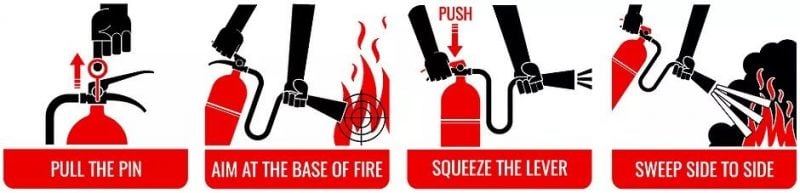
Like all other fire extinguishers, you need to remember the PASS-word. Pull the Pin Aim at the base of the fire. Squeeze the handle. Sweep from side to side. 

Fire extinguisher PASS method

 See our guide on How to Use a Fire Extinguisher.  

From Our Fire Protection Blog Page https://fireprotectiononline.co.nz/carbon-dioxide-fire-extinguishers-nz/

from
https://fireprotectiononline1.wordpress.com/2019/10/22/all-about-carbon-dioxide-fire-extinguishers/

From https://catherinelee4.blogspot.com/2019/10/all-about-carbon-dioxide-fire.html

source https://catherinelee4.wordpress.com/2019/10/22/all-about-carbon-dioxide-fire-extinguishers/

Monday, 21 October 2019

How To Become A Firefighter In West Virginia

It can often feel as though the state of West Virginia has been left behind, but many still wonder how to become a firefighter in West Virginia. 

There are problems with employment, decreasing population numbers and poverty. But, no matter the health and well-being of the state, the fire service is always there with whatever resources are available.

This means numerous departments across the state offering advice on fire prevention, helping with fire suppression and saving lives during a medical emergency.

How to Become a Firefighter in West Virginia

  • 18 years of age
  • High school education or GED
  • Resident of the state
  • Valid driver’s license
  • EMT certificate preferred

This is a good starting point for anyone wondering how to become a firefighter in West Virginia. You can use this to work your way through the hiring process and into a new career.

I will talk more about that process below as well as some of the training options available. I also want to talk about some of the different factors – good and bad – that make firefighting in West Virginia a little bit different.

There are issues to overcome here, but this should be more incentive to create a better community through service.

Firefighting in West Virginia

The basic requirements are very similar across all departments. It is quite easy to get started if you are prepared to work for the qualifications you don’t have.

This typically means basic firefighter training for Firefighter 1 and an EMT certificate for medical emergencies.

If you pass the initial application, then you will face a screening process. Again, this is pretty standard practice and typically contains a background check, physical fitness test and medical.

Some departments will also add in a psychological test and perhaps a polygraph test. This gives them a better idea of your character and suitability for the role. It’s also important to note that this is more likely in major cities than smaller volunteer stations.

One thing that you will notice about West Virginia is the lower age limit for firefighters. There are some departments in other states that prefer that candidates are 19 or even 21.

Here 18 is the norm.

However, there are also plenty of opportunities for those that are even younger. It seems as though the state is trying to draw in potential applicants from childhood to secure the size of departments in the future.

Therefore, those that dream of being a firefighter from a young age may be able to work towards their goal sooner than they expect.

There are two ways to do this in West Virginia. The first step is the explorer program for children under 16. This fun program teaches kids about what it means to be a part of the fire service and the roles and responsibilities.

There is an educational benefit here as well as a social one.

Regular attendance can shape a child’s understanding of the department and their attitudes towards their community.

Then there is the Junior Firefighter program for teens aged 16 to 18. Here they can take part in some activities within the fire department as a kind of work experience program.

The skills learned here may help them to apply for a full-time volunteer or career role at a later date.

More information about these programs is available here.

Other issues facing West Virginia firefighters

There are 12 million acres of forest in West Virginia under the protection of the Division of Forestry. One of the threats to this natural resource is wildfire.

Wildfire danger maps and fire season guidelines are a great start in the prevention of fire. Strong laws on outdoor burning reduce the need for firefighters to come and manage wildfires.

However, some disregard the law, make mistakes and even those that commit arson. So, firefighters in West Virginia need to have adequate wildland fire training to preserve the forests and those that live near them. Find out more here.

Poverty rates in West Virginia are high. A survey in 2017 found that 19% of the population were living in poverty.

Income growth is small and unemployment has grown. Poverty on this scale, especially in rural communities, can increase fire risks.

Therefore, it is important that all rural West Virginia departments can cater to their needs. This means rapid responses to out-of-reach places and the tools to handle structural damage and any hazardous materials within the homes.

Crews also need to have the communication skills and outreach programs to educate these communities on the best way to stay safe. Guidance on fire safety is just as important as fire suppression in these areas.

Anyone training to be a firefighter in West Virginia needs to have a wide skill set to handle all these issues.

Those that start their basic training as a volunteer or reserve firefighter need to continue their studies throughout their career. There is always something new to learn when it comes to emergency situations, rescue strategies and the best equipment.

Fire Academies in West Virginia

There aren’t too many choices when it comes to a formal education for firefighters in West Virginia. There are few options below that offer academic fire courses. The alternative is to work with a department as a volunteer to gain your experience and training.

Charleston: American Public University

Martinsburg: Blue Ridge Community and Technical College

Weston: West Virginia University Fire Service Extension

The American Public University offers a Bachelor of Science degree program in Fire Science Management.

This allows students the chance to study different aspects of the profession in theory and in practice. It starts with some ideas of fire prevention and suppression as well as looking at fire behavior.

There are also modules on disaster management and emergency responses. The unusual thing about this course is that it is a Momentum program. This means working with mentors on specific areas one by one rather than working in classes.

This can offer a more personalized approach and one-to-one experience. The program is only available to those with an associate degree. Find out more about this program here.

The WVU Extension Service began a training program since 1974 and has since grown to cater to many new recruits across the state. T

hey continually work to improve their range and standards and work to the regulations of the National Fire Academy.

The facility houses 25,752 square feet of training areas, classroom and more to provide the very best experience for students.

This means comprehensive basic training for anyone starting their journey in the West Virginia fire service. You can learn more here.

Major Fire Departments in West Virginia

The following is a list of major fire departments in West Virginia.  While it isn’t comprehensive it’s a great place to start if you’re interested in how to become a firefighter in West Virginia.

How to Become a Charleston, WV Firefighter

  • 18 years of age
  • High school education or GED
  • Resident of the state
  • Valid driver’s license
  • EMT certificate preferred

Charleston and Huntington are roughly the same size in terms of population, with only 47,000 – 48,000 people.

The Charleston Fire Department is the larger of the two fire departments, however, with 169 staff at 8 stations.

They can respond to as many as 30,000 emergency incidents per year. This includes fires, accidents and medical emergencies.

Department members here need to have all the necessary skills to handle a range of calls. On-going training after the hiring process is a must, including certification in hazardous materials and more advanced strategies helps you protect the community more easily. Learn more here.

How to Become a Martinsburg, WV Firefighter

  • 18 years of age
  • High school education or GED
  • Resident of the state
  • Valid driver’s license
  • EMT certificate preferred

Martinsburg is much smaller with just 17,400 people. Still, they have a dedicated 37-person career department on call to help protect those in the jurisdiction.

This includes divisions for fire safety and rescue but also ambulance support. The minimum requirements to join this department are standard regarding age, education and residency.

Those that don’t have EMT certification at the time of application are expected to begin working towards it within 90 days of employment. Find out more about the department here.

Job Prospects for Firefighters in West Virginia

The poverty seen in West Virginia is reflected in the salary offered and job opportunities compared to other neighboring states.

There is a massive difference between West Virginia and Virginia. The larger, eastern state employed 10,160 in 2018 with a mean annual salary of $51,510.

In West Virginia, there were 830 firefighters and an average wage per year of $36,820.

However, Charleston does offer pay incentives for those with medical training. Paramedics get an extra $2400 a year. Huntington offers $35,975 for the first year with a program to increase to $40,749 after five years.

https://www.bls.gov/oes/current/oes332011.htm#st

Just because West Virginia has a low number of firefighter positions, that doesn’t mean that you should give up on any hopes of joining the fire service here.

The state will always need fully-staffed departments to cover every populated region. It may be too late for you to enroll in any junior program, but this is a great tool for the next generation.

Volunteer service and college education are available to help you get into the fire service. From there, you can build on your skills to enjoy a very fulfilling career.

The post How To Become A Firefighter In West Virginia appeared first on FirefighterNOW.

from FirefighterNOW https://firefighternow.com/how-to-become-a-firefighter-in-west-virginia/

From https://catherinelee4.blogspot.com/2019/10/how-to-become-firefighter-in-west.html

source https://catherinelee4.wordpress.com/2019/10/21/how-to-become-a-firefighter-in-west-virginia/
How To Become A Firefighter In Nebraska

I’ve heard lots of questions from aspiring firefighters asking how to become a firefighter in Nebraska.  Many states would claim to be the heart of America in terms of their history or their culture but, geographically, the title has to go to Nebraska.

This triple-landlocked state lies deep on the great plains and beside the Missouri River. This makes it perfect for agriculture, plenty of National Parks and also their fair share of tornadoes.

Between these risk factors and those in the state’s bigger cities, firefighters need the skills to handle emergencies effectively.

How to Become a Firefighter in Nebraska

  • At least 18 years old
  • A high school diploma or GED
  • US citizenship and local residency
  • A valid state driver’s license

As you can see, there aren’t too many hurdles to overcome here if you’re interested in how to become a firefighter in Nebraska. Most volunteer departments have these relaxed rules on applicants and the initial stages for career departments are similar.

You will, however, find that different departments have their own preferences and screening processes. So, it helps to contact them directly for more information.

Below I will look at some of the consideration to keep in mind about different departments and the training opportunities available. Before that, I want to discuss some of the risks and roles that you may encounter when working as a Nebraskan firefighter.

Firefighting in Nebraska

Nebraska encounters its fair share of extreme weather and storms. We often think of the worst weather events occurring closer to the coast but there are plenty of thunderstorms here.

A bolt of lightning in the wrong place in rural Nebraska can set fire to farms, forests and homes. Heavy rains could also cause flooding in some areas.

Fire crews need to be able to react to these situations, even if they are volunteers. That is why volunteer crews must be trained in all basic responses and EMT needs.

Nebraska can also experience some tornadoes due to its position within Tornado Alley. This is the prime spot for these disasters to occur, especially during the spring and summer.

A bad tornado can cause a lot of damage and injury those that caught up in them. Fire crews are often the first responders to help the injured, rescue those trapped in a building and make sure areas are secure.

Nebraska is also home to a lot of national parks. These sites need to be protected because of their history, ecology and appeal to tourists. The problem is that some visitors can be careless when camping or hiking here. There is big risk of wildfire in hotter, drier months.

Departments in these rural areas need to have proper training to manage wildfires. This either means controlling natural burns for the good of the landscape or protecting areas from man-made fires.

Wildland fire management skills are an essential part of further training out here.

Fire Academies in Nebraska

If you want to train to be a firefighter in Nebraska, there are a few different options as far as colleges and fire academies. However, the best are usually located in either Lincoln or Omaha.

You can start your education here to get a great foundation for your career. Alternatively, you can work as a volunteer and build on your skills through programs provided by your department.

Lincoln: Southeast Community College Area, University of Nebraska–Lincoln, Nebraska Fire Marshal Training Division and Kaplan University-Lincoln Campus

Omaha: University of Nebraska at Omaha,  Metropolitan Community College Area and Kaplan University-Omaha Campus

The University of Nebraska in Omaha offers a Fire Service Management course as a Bachelor of Science Degree. This program works a little differently to those in other colleges in the US.

Here students get to specialize early on to narrow down their interest. They can pick two areas from a list that includes Natural Disasters, Urban Hazard Preparation, Public Health and Criminology.

Choosing two specializations here has its pros and cons. It doesn’t offer the more well-rounded education of some other courses. Yet, it does offer detailed training for future career options.

For example, those that want to work in emergency relief can focus on natural disasters. Those that want a more administrative role may choose public health. The urban hazard module may also help those that know that they want to work in major cities.

Find out more about here.

The Nebraska training division in Lincoln is a much better option for those that want to learn all the basics of an entry-level firefighting position. The academy can help applicants learn the right skills to take their exams for Firefighter 1 and 2.

This means a more comprehensive approach to equipment, procedures and strategies in different situations.

The academy also provides students with the chance to return as qualified firefighters to train in other disciplines. This includes courses on vehicle extraction, rope rescue, hazardous materials and more. Learn more here.

Major Fire Departments in Nebraska

The majority of firefighters in Nebraska work in volunteer departments. There are many smaller community departments in the state that take people on in this capacity to oversee small towns and county emergencies.

There are also a few departments with paid roles in larger cities and jurisdictions with higher demands. This includes Omaha, Lincoln, Grand Island and Bellevue.

How to Become a Omaha, NE Firefighter

  • At least 18 years old
  • A high school diploma or GED
  • US citizenship and local residency
  • A valid state driver’s license

Omaha is the only metropolitan area in Nebraska and therefore has the largest urban population to protect. There are around 468,000 people over 141.81 square miles.

This means that the city needs a large, highly trained fire department to handle all the fire and medical-related calls that come in.

There is also a large airport here that needs its own station and adequate cover to protect passengers and aircraft. You can learn more about this department here.

Crews that handle the airport need to prepare for a range of issues from dealing with fuel fires and other hazardous materials to any structural problems in the airport itself.

Therefore, Omaha firefighters need to be vigilant with their training to stay up to date on strategies and equipment.

The airport authority will often carry out full-scale simulations of airline crashes and fires with multiple departments. It is all about preparing first response teams for the worst-case scenarios.

How to Become a Lincoln, NE Firefighter

  • At least 18 years old
  • A high school diploma or GED
  • US citizenship and local residency
  • A valid state driver’s license

One thing that you should be aware of in Lincoln is that they have a few additional preferences for applicants. If you meet these standards, then you have a better chance of working your way through the hiring process.

They like their applicants to have experience – either vocational or academic. So, those that have a fire science degree or volunteer experience stand a better chance.

There are also preference points for anyone that can communicate in a foreign language or those with military experience.

While Nebraska is predominantly white and English speaking, it does have residents of Hispanic, Native American and Asian descent. This is why language and communication skills are so important. Find out more here.

How to Become a McCook, NE Firefighter

  • At least 18 years old
  • A high school diploma or GED
  • US citizenship and local residency
  • A valid state driver’s license

The McCook Fire Department is a combination department with a mix of 27 volunteers and 7 career firefighters. They cover an area of around 360 square miles, which take them past the city limits and into the wider county area.

One of the more interesting statistics from this area is that they respond to significantly more emergency medical incidents than fires. In 2018 there were 977 EMS incidents and 194 fire incidents.

The staff at McCook are fairly open to anyone joining as a volunteer if they possess the right attitude and fitness levels.

For example, a past criminal conviction isn’t a cause for automatic disqualification here. They will look at circumstances to determine whether you are still a good fit for the department. What they want most is a commitment to learn and serve.

They want volunteers that can complete their Fire and EMT training, comply with the department standards and provide 12 consecutive months of service. This also means a firefighting schedule that includes being on call during weekends and holidays.

Those that prove themselves here set themselves up well for future roles in the fire service at career departments.  Find out more here.

Job Prospects for Firefighters in Nebraska

Employment levels are quite low generally in the Midwest compared to some of the other regions and densely populated states.

Nebraska is recorded as having 1,140 firefighters with a ration of 1.17 per 1000 jobs. Both the Dakotas have half as many.

Nebraska does buck the trend slightly by offering a little more as a mean annual wage.

In 2018, the average salary for a Nebraska firefighter was $47,880 as compared to $44,710 in South Dakota and $43,810 in Wyoming.

https://www.bls.gov/oes/current/oes332011.htm#st

Nebraska may not have as many stations and job opportunities as other states in the US, but it does find ways to help applicants become a part of the fire service. Those that want to take an academic approach can attend a community college in the state and get the right certification.

Others will find that volunteer departments are open to many people and they can get their experience and qualifications that way.

Whichever route you take, you can be sure of a rewarding career looking after your community if you are interested in how to become a firefighter in Nebraska.

The post How To Become A Firefighter In Nebraska appeared first on FirefighterNOW.

from FirefighterNOW https://firefighternow.com/how-to-become-a-firefighter-in-nebraska/

From https://catherinelee4.blogspot.com/2019/10/how-to-become-firefighter-in-nebraska.html

source https://catherinelee4.wordpress.com/2019/10/21/how-to-become-a-firefighter-in-nebraska/

How To Become A Firefighter In Alabama

Many aspiring firefighters in Alabama have asked how to become a firefighter in Alabama. 

Alabama is a state on the rise in terms of its living standards, population growth and it’s economy. Fire departments here have many challenges ahead of them to help protect this population and its infrastructure.

How to Become a Firefighter in Alabama

  • Applicants must have graduated from a high school or hold an equivalent qualification
  • Applicants must hold the State of Alabama’s valid driver’s license
  • Applicants must be citizens of the United States
  • Applicants must have successfully completed the Candidate Physical Agility Test (CPAT)
  • Applicants must hold the State of Alabama’s EMS certification at the EMT-Basic level or above

The basic guidelines in Alabama are actually quite straightforward. As long as you have residency and educational qualification to process, and have a valid state license, you can continue with the application process.

From there, it is up to different departments within the state to create their own, more detailed checklist of expectations. This is I what I will to talk about in more detail below.

I want to discuss some of the training requirements and the hiring process of becoming a firefighter in Alabama.

Firefighting in Alabama

One of the things that you will notice in many of the statements from fire departments in Alabama is that they are “equal opportunities employers”. All departments have to make this claim now to help attract applicants of different genders, races and sexual orientation.

This means that anyone can apply to be a firefighter in Alabama. There are some women and members of black and Hispanic communities taking on roles in both career departments and volunteer departments.

Everyone in Alabama with an interest in becoming a firefighter is encouraged to apply and work through the process. If you can pass the initial minimum requirements, do well in the firefighter interview, progress through the background checks and work through the training, you should have a good chance.

The firefighter hiring process in Alabama

The Alabama hiring process is long and complex – as are many in states across the country. Applicants that pass the initial stages with their proof of age, residency and education requirements will be faced with more interviews, screenings and background checks.

Departments want to be sure that all new recruits have the right moral character to become part of the department.

This is a term that may be open to interpretation by different chiefs and department officers.

For the most part, this means having a clean criminal record, a clean driver’s license and showcasing the right personality for the job.

Many Alabama departments will be strict when it comes to any past criminal activity, including some smaller misdemeanors. Many also prefer that applicants don’t have any past issues with DUI, drugs or even tobacco use.  

It’s important to keep in mind that as you progress through the hiring process you should expect to be drug tested as well.  You can click this link to learn more about what to expect during a firefighter drug test.

Fire Academies in Alabama

Alabama has community colleges, technical schools and fire academies in several major towns and cities throughout the state. There are too many to list in this guide.

Instead, here are some of the different options in five of the towns with the most to offer.

Birmingham: Lawson State Community College and Jefferson State Community College

Monroeville: Alabama Southern Community College

Montgomery: Alabama State Fire Marshal and Auburn University At Montgomery

Mobile: Bishop State Community College, Southeast Alabama EMS System and University Of South Alabama

Tuscaloosa: Alabama Fire College and Shelton State Community College

Community colleges are often the best place to gain an education in firefighting while looking for some hands-on experience.

The Jefferson State program in Birmingham teaches students about all the basics in training, strategies, equipment and more.

There is an advanced certificate over 33 hours and an associate degree over 61 hours. The latter goes much deeper into the firefighting and advanced shills to prepare for work in the fire service.

The courses also offer enough credit to go on to take Firefighter 1 and 2 certification exams or to transfer to a 4-year college. You can find out more about the modules and structure here.

The state is also home to the Alabama Fire College, which offers everything from your basic qualifications up to all of the specializations after becoming a career firefighter.

The facility lets new applicants progress onto their Firefighter 1 exam with material accredited by the Regional Training Network and local departments.

Originally, these courses were available in the Tuscaloosa Fire College only. The network has since grown to bring in 12 regional centers and 8 more extension centers. This means greater accessibility for recruits.

It is now seen as one of the best resources out there for self-sponsored students that don’t have the financial support of a department hiring them. Learn more by following this link.   

New recruits should also be aware that some departments will place heavy emphasis on the importance of further study. Anyone starting out with their Firefighter I certification should understand that this is the start of a long process.

Qualified firefighters need to keep up with their training and learn more skills. There are lots of specialist areas of knowledge and certification can improve job prospects further down the line.

Major Fire Departments in Alabama

The following is a list of a few major fire departments in Alabama.  While this list is far from comprehensive, it’s a good place to start if you’re interested in how to become a firefighter in Alabama.

How to Become a Montgomery, AL Firefighter

  • Applicants must have graduated from a high school or hold an equivalent qualification
  • Applicants must hold the State of Alabama’s valid driver’s license
  • Applicants must be citizens of the United States
  • Applicants must have successfully completed the Candidate Physical Agility Test (CPAT)
  • Applicants must hold the State of Alabama’s EMS certification at the EMT-Basic level or above

The Montgomery Fire Department basic requirements are simple enough for those that want to apply at an entry-level position. But, there is the insistence that applicants have no background involving “violence or moral turpitude.”

The wording of this clause is interesting and will be tested during the interview and screening processes.

Montgomery is one of the largest departments in the state with around 450 members covering 175 square miles and 200,000 people via 15 stations.

It was the first station with an ISO 1 rating. Firefighters here are part of a close-knit team that is experienced and professional at all times. Find out more about Montgomery here. 

How to Become a Tuscaloosa, AL Firefighter

  • High school diploma or GED required; no previous experience required.
  • Must be at least 19 years of age.
  • Must possess a valid driver’s license.
  • Must be able to obtain and maintain a valid Alabama Firefighter I and Firefighter II certification within the first year of employment.

The Tuscaloosa Fire Department has a long history within the city and has continually grown to meet the needs of its residents and communities.

At the moment, this means that over 250 firefighters are working out of 11 stations.

The crews serve a population of around 105,000 people over 71.78 miles of land. This includes the campuses of the University of Alabama and other colleges.

The city was named the “Most Livable City in America” and a great place for young people, which brings in many students and new residents.

These residents need a department that can handle the basics of fire suppression and operations in accidents and major blazes. Crews should also help in specialist areas dealing with water rescue and dangerous materials.

How to Become a Mobile, AL Firefighter

  • Applicants must have graduated from a high school or hold an equivalent qualification
  • Applicants must hold the State of Alabama’s valid driver’s license
  • Applicants must be citizens of the United States
  • Applicants must have successfully completed the Candidate Physical Agility Test (CPAT)
  • Applicants must hold the State of Alabama’s EMS certification at the EMT-Basic level or above

Mobile is a city that is in need skilled, professional firefighters in increasing number for years to come. The city is growing all the time as the port expands, new businesses flood in and the population grows to sustain both.

This means more staff to cover the residential and business districts and enough training personnel to look after incidents at the port.

The port means that firefighters here need different skills than those further inland or out in the country.

These ships and facilities are large-scale structures that can contain large amounts of dangerous materials. There is also the need for water rescue knowledge. Therefore, those that apply to join in Mobile should make sure they continue past their basic training.

Job Prospects for Firefighter in Alabama

The current stats for some of the major cities show that Alabama is a state on the rise.

People are drawn to the major cities for education, work and a good family life. Therefore, we should expect there to be plenty of positions available – either in career roles or in volunteer departments.

As of 2018, there were 5680 firefighters employed in the state. This was actually a high ratio compared to others with 2.92 posts per 1000 jobs.

The annual mean wage for firefighters in Alabama was $41,740.

This isn’t the lowest in the country nor the highest. Be aware that wages can vary greatly depending on experience, roles and location.

https://www.bls.gov/oes/current/oes332011.htm#st

If you want to know how to become a firefighter in Alabama, it may be getting easier and easier. There are still strict rules about moral character and past behavior, they are growing as a state, and with this growth comes the need for more firefighters.

There is certainly enough growth and enough funding for training courses to help new applicants proceed with their dreams. Talk to local departments about their upcoming opportunities and look for a training facility near you.

The post How To Become A Firefighter In Alabama appeared first on FirefighterNOW.

from FirefighterNOW https://firefighternow.com/how-to-become-a-firefighter-in-alabama/

From https://catherinelee4.blogspot.com/2019/10/how-to-become-firefighter-in-alabama.html

source https://catherinelee4.wordpress.com/2019/10/21/how-to-become-a-firefighter-in-alabama/